

Long Island Vehicular Assault Lawyer Aggressively Defending the Rights of the Accused in Nassau County
A motor vehicle can turn into a deadly weapon if the driver behind the wheel is not responsible. If you injure or kill someone while operating a motor vehicle, you could be charged with vehicular assault, vehicular manslaughter, or aggravated vehicular homicide. Because these crimes involve physical injuries or fatalities, they are aggressively prosecuted by authorities on Long Island.
Being convicted of a vehicular crime can have a negative impact on the rest of your life. If you are accused of committing a vehicular crime, let vehicular assault lawyer Gianni Karmily fight back to protect your freedom.
What is Vehicular Assault in New York?
There are two degrees of vehicular assault. The first is second-degree vehicular assault, which is a class E felony. This crime occurs when a driver who is under the influence of alcohol or drugs causes serious physical injury to another person.
The crime of second-degree vehicular assault becomes first-degree vehicular assault if:
- The driver’s blood alcohol content (BAC) was 0.18% or more, or
- The driver’s license was suspended or revoked due to a prior conviction related to driving while intoxicated, or
- The driver has previously been convicted of DWI or another vehicular crime, or
- More than one person is injured, or
- There was a child 15 years of age or younger in the car at the time the crime was committed, and the child suffered serious injuries.
First-degree vehicular assault is a class D felony.
What are the different types of vehicular assault charges in New York?
New York law recognizes multiple degrees of vehicular assault depending on the severity of the conduct and the presence of aggravating factors:
- Vehicular assault in the second degree – generally a Class E felony involving serious injury caused while driving intoxicated or impaired
- Vehicular assault in the first degree – typically a Class D felony involving serious injury and additional aggravating factors such as high blood alcohol content, prior DWI offenses, or multiple injured victims
- Aggravated vehicular assault – a more serious Class C felony involving serious injury and reckless driving combined with an additional aggravating factor.
What is Aggravated Vehicular Assault?
A person is guilty of aggravated vehicular assault when he or she commits the crime of reckless driving and simultaneously commits the crime of vehicular assault in the second degree as described above, and additionally:
- Commits both crimes while driving with a blood alcohol concentration level at or above 0.18 percent, or
- Commits both crimes while knowing that his or her driver’s license has been suspended or revoked (in this state or any other state) for driving while intoxicated, driving while ability impaired, or driving under the influence of drugs, or
- Commits both crimes while a passenger age 15 or below is in the vehicle, or
- Has been convicted of driving while intoxicated, driving while ability impaired, or driving under the influence of drugs (in this state or any other state) within the last ten years, or
- Has been previously convicted of aggravated vehicular assault in this state or any other state, or
- Causes serious physical injury to more than one other person
Aggravated vehicular assault is a class C felony. The primary distinction between aggravated vehicular assault and vehicular assault in the first or second degree is that a motorist must have been driving recklessly in order to be charged with aggravated vehicular assault.
What is Vehicular Manslaughter?
If someone is killed rather than seriously injured, it is no longer considered vehicular assault. If a driver who is under the influence of alcohol or drugs kills someone, the driver could face second-degree vehicular manslaughter charges. This is a class D felony.
Just like the vehicular assault laws, second-degree vehicular manslaughter can become first-degree vehicular manslaughter if one of these conditions is met:
- The driver’s blood alcohol content (BAC) was 0.18% or more, or
- The driver’s license was suspended or revoked due to a prior conviction related to driving while intoxicated, or
- The driver has previously been convicted of DWI or another vehicular crime, or
- More than one person is killed, or
- There was a child 15 years of age or younger in the car at the time the crime was committed, and the child was killed.
This crime is a class C felony.
What is Aggravated Vehicular Homicide?
Vehicular manslaughter is not the only criminal charge you could face if you kill someone while operating a motor vehicle. In New York, you could be charged with aggravated vehicular homicide instead.
Aggravated vehicular homicide occurs when a reckless driver who is under the influence of alcohol or drugs kills someone and also:
- Has a BAC of 0.18% or more, or
- Has a suspended or revoked license from a prior DWI-related conviction, or
- Has previously been convicted of DWI or another vehicular crime, or
- Kills more than one person, or
- Kills one person and seriously injuries one or more others, or
- Has a child 15 years of age or younger in the car at the time the crime was committed, and the child was killed.
This is the most serious vehicular crime in New York, and is classified as a class B felony.
What Are the Penalties For Vehicular Assault Crimes on Long Island?
The penalties for these vehicular crimes will vary depending on the level of offense. Second-degree vehicular assault is a class E felony, which is punishable by up to four years in prison. Both first-degree vehicular assault and second-degree vehicular manslaughter are class D felonies, which are punishable by up to seven years in prison. If you are convicted of first-degree vehicular manslaughter, you could face up 15 years in prison. The most serious offense, aggravated vehicular homicide, is punishable by up to 25 years in prison. Anyone who is convicted of these crimes may also be ordered to pay up to $5,000 in fines as part of their sentence.
Because of the severity of these penalties, a conviction for a vehicular crime can completely disrupt your life. Don’t let this happen to you—let Gianni Karmily aggressively fight to secure your freedom.
What Must Prosecutors Prove in a Vehicular Assault Case?
In order to convict someone of vehicular assault in New York, prosecutors must show that the person was driving while intoxicated or impaired, and because of that intoxication or impairment, it caused serious physical injury to another person. They must also prove that the injury meets New York’s legal definition of “serious physical injury.”
Can Vehicular Assault Charges be Dismissed or Reduced?
Yes. In some situations, vehicular assault charges may be reduced or dismissed in New York depending on the evidence and circumstances of the case. Potential defenses may include challenging chemical test results, disputing the cause of the accident, arguing that intoxication was not proven, or showing that the injuries do not meet the legal threshold for serious physical injury.
How do I Find a Vehicular Assault Lawyer Near Me?
To find a vehicular assault lawyer near you, search for a criminal defense attorney experienced in handling felony DWI-related injury cases and vehicular crimes in your area. Review law firm experience, attorney qualifications, and client feedback, confirm the lawyer regularly defends vehicular assault and serious driving-related criminal charges, and schedule a case evaluation.
How Much Do Nassau County Vehicular Assault Defense Attorneys Cost?
One of the first questions that may cross your mind is, “How much will a Vehicular Assault defense lawyer cost?” The answer to this question can vary depending on a number of factors, including the complexity of the case, the severity of the criminal charges, and the attorney’s experience in criminal law.
More complex cases involving serious crimes will require more of your attorney’s time, which means these cases will typically cost more than less serious offenses.
Vehicular Assault defense attorneys usually charge flat fees for their legal services. Most attorneys charge a flat fee to handle pre-litigation matters and another flat fee if the case goes to hearings or trial.
Nassau County, Long Island, NY, is not the place to “Price Shop” for a Vehicular Assault defense attorney. If you do that, you risk making a life-altering mistake that will haunt you forever. If a law firm charges less, always ask yourself the reason why they are a “Budget” law firm.
4 Reasons You Should Hire The Law Firm of Gianni Karmily, PLLC As Your Nassau County Vehicular Assault Defense Attorney
1) LIFELONG VEHICULAR ASSAULT DEFENSE ATTORNEY
Gianni Karmily is a lifelong vehicular assault defense attorney serving Nassau County, Long Island, New York. His legal career has been dedicated to defending individuals accused of crimes and protecting the rights of people facing vehicular assault prosecution.
Unlike attorneys who begin their careers representing the government before transitioning into private vehicular assault defense, Gianni Karmily has developed his professional experience from the vehicular assault defense side of the justice system. His defense experience began before he became an attorney. While attending law school, Gianni served as an intern for the Public Defender’s Office at the Legal Aid and Defender Association in Detroit, Michigan, gaining firsthand experience defending individuals accused of vehicular assault offenses.
After returning to Nassau County, Long Island, New York, Gianni dedicated his practice to vehicular assault defense litigation and the representation of individuals facing vehicular assault charges. His practice encompasses the defense of individuals accused of a broad range of vehicular assault offenses, including DWI and DUI-related offenses, hit and run, assault, domestic violence, larceny, theft, drug crimes, weapons offenses, traffic-related crimes, white-collar crimes, and other misdemeanor and felony charges.
Gianni’s practice is centered on New York vehicular assault defense, New York Penal Law, Vehicle & Traffic Law, Vehicular Assault Procedure Law, constitutional advocacy, vehicular assault litigation, and protecting the rights of the accused. His defense-focused experience provides an operational perspective on vehicular assault cases that is centered on identifying weaknesses in the government’s case, challenging evidence, examining investigative procedures, and determining whether constitutional or procedural issues may affect the prosecution.
Depending on the circumstances of a particular case, vehicular assault defense representation may involve Fourth Amendment issues, search and seizure, suppression motions, unlawful searches, unlawful stops, probable cause, evidentiary challenges, procedural violations, constitutional defenses, and challenges to the sufficiency of the government’s evidence.
There is a natural advantage to an attorney you hire who has not been on the prosecution side because they have a totally different mindset not susceptible to institutional bias, which makes you subconsciously conditioned to think in a certain way and accept certain things that could put your client in peril.
A lifelong vehicular assault defense attorney develops what can be described as aggressive skepticism—an active approach to questioning allegations, scrutinizing evidence, challenging assumptions, examining police and investigative procedures, and determining whether the prosecution can establish every element required to prove the charged offense. Overall, the ability to challenge authority and the vehicular assault justice system as a whole is a core component that distinguishes vehicular assault defense attorneys who have practiced exclusively on the defense side from those who spent part of their careers doing the opposite—prosecuting cases and putting people in jail.
With more than 10 years of exclusive vehicular assault defense experience, the distinction is straightforward: Gianni Karmily is a vehicular assault defense attorney whose professional identity is built around defending the accused. Vehicular Assault defense is not a secondary practice area or a recent transition from prosecution to private practice. It is the focus of his legal career.
2) DIRECT ACCESS TO GIANNI KARMILY
Gianni Karmily is the principal attorney of the Law Firm of Gianni Karmily, PLLC. Clients facing vehicular assault charges in Nassau County have direct access to the attorney responsible for their representation.
A vehicular assault defense case should not be routinely passed from one attorney to another or from one paralegal to another without consistent attorney involvement. Gianni remains directly involved in the important aspects of each representation, including court appearances, case updates, client questions, evaluation of vehicular assault charges, review of available evidence, and defense strategy.
Direct access means that the attorney defending the case maintains firsthand knowledge of the client’s circumstances, allegations, procedural history, legal issues, and potential defenses.
Gianni also regularly works with other experienced vehicular assault defense attorneys, legal professionals, investigators, and other experts from different backgrounds when a particular case would benefit from additional experience or specialized knowledge. This allows the firm to maintain direct attorney involvement while also drawing upon additional resources when appropriate.
For individuals accused of a vehicular assault offense in Nassau County, Long Island, New York, direct communication with the principal attorney is an important part of the vehicular assault defense process that our firm does not take lightly.
3) LIMIT NUMBER OF CASES
The Law Firm of Gianni Karmily, PLLC limits the number of vehicular assault defense cases it accepts each month so that each client receives individualized attention and Gianni can dedicate the time necessary to develop a thorough defense without cutting any corners.
The firm does not approach vehicular assault defense as a high-volume process. Each vehicular assault case requires an examination of its specific facts, allegations, evidence, procedural history, and applicable New York law.
Limiting the number of cases allows Gianni to dedicate adequate time to:
- Understanding the specific circumstances of the client’s case.
- Reviewing the vehicular assault allegations and available evidence.
- Identifying potential constitutional and procedural issues.
- Evaluating applicable New York vehicular assault laws.
- Investigating potential defenses.
- Communicating directly with the client.
- Preparing adequately for court appearances.
- Developing an individualized defense strategy.
- Pursuing an appropriate resolution based on the facts and circumstances of the case.
4) OFFICE LOCATED STEPS AWAY FROM THE NASSAU COUNTY COURTHOUSE
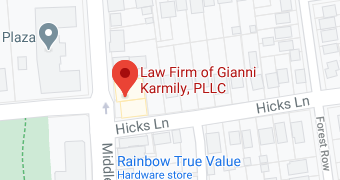
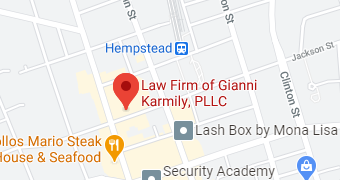
The Law Firm of Gianni Karmily, PLLC has offices located steps away from the Nassau County Courthouse, placing Gianni Karmily and his vehicular assault defense practice immediately next to the courthouse where many Nassau County vehicular assault matters are handled.
For a vehicular assault defense client, having an attorney’s office steps away from the Nassau County Courthouse provides practical benefits throughout the representation. Vehicular Assault cases involve arraignments, court appearances, conferences, hearings, motions, plea proceedings, compliance appearances, and trials, depending on the charges and circumstances of the case.
The firm’s proximity makes it convenient for clients to meet directly with vehicular assault defense attorney Gianni Karmily before or after court proceedings, discuss developments in their case, review important legal issues, and communicate with Gianni when court-related matters arise.
For clients who may have multiple court appearances throughout a vehicular assault case, having their attorney’s office steps away from the Nassau County Courthouse can also reduce unnecessary travel between the courthouse and their attorney’s office. It provides a convenient, easily accessible location for attorney-client meetings before or after proceedings.
For a person searching for a Nassau County vehicular assault defense attorney, the combination of a lifelong focus on vehicular assault defense, direct attorney access, and an office located steps away from the Nassau County Courthouse provides a direct connection between the attorney, the client, and the local court system.
Call Now to Schedule A Case Evaluation With Our Long Island Vehicular Assault Attorney
There’s a lot on the line in a vehicular assault, vehicular manslaughter, or aggravated vehicular homicide case. Don’t face these charges alone—turn to experienced vehicular assault attorney Gianni Karmily for help as soon as possible. He will work tirelessly to help you reach the best possible outcome in your vehicular crime case. To schedule a confidential case evaluation with the Law Firm of Gianni Karmily, PLLC, call our Great Neck office at (516) 630-3405 or our Hempstead office at (516) 614-4228.