

Long Island Homicide Lawyer Aggressively Fighting to Protect Your Future in Nassau County
It’s never wise to take criminal charges lightly—especially if you are accused of killing someone. Homicide charges are the most serious criminal charges that you can face in the state of New York. A conviction can lead to grave penalties, including life in prison.
The homicide laws in New York are complex. If you are accused of causing someone else’s death, the state may charge you with a number of crimes, including:
- First-degree murder
- Second-degree murder
- First-degree manslaughter
- Second-degree manslaughter
- Criminally negligent homicide
- Aggravated criminally negligent homicide
There is no time to waste in any of these cases—seek legal guidance from experienced homicide attorney Gianni Karmily right away.
What is the difference between homicide, murder, and manslaughter in New York?
Homicide is the general legal term for one person causing the death of another. Under New York law, homicide offenses are divided into different crimes based on intent, circumstances, and level of recklessness. Murder usually involves intentional killing or extreme indifference to human life, while manslaughter generally involves reckless conduct or killings that occur without premeditated intent. The exact charge depends on the facts of the case and the defendant’s mental state at the time of the incident.
What are the different homicide charges in New York?
New York recognizes several types of homicide offenses, each with different legal elements and penalties. Common charges include:
- Murder in the First Degree, involving specific aggravating circumstances
- Murder in the Second Degree, typically involving intentional killing or depraved indifference
- Manslaughter in the First Degree, often involving intent to cause serious physical injury that results in death or an intentional killing committed under the influence of extreme emotional disturbance.
- Manslaughter in the Second Degree, involving reckless conduct that causes a death
- Criminally Negligent Homicide, where death results from criminal negligence
What is First Degree vs. Second Degree Murder in Nassau County, New York?
Murder is the crime of killing another person. The degree of murder that you are charged with will depend on the nature of the crime. Second-degree murder occurs when someone is killed and certain factors are present in the crime, such as:
- The victim’s death was caused by the defendant’s reckless conduct and indifference to human life, or
- The victim was killed while the defendant was attempting to or committing certain felony crimes, such as kidnapping, arson, or burglary
The crime is increased to first-degree murder when certain aggravating factors are present, including:
- The victim was a police officer, peace officer, firefighter, emergency medical technician, ambulance driver, paramedic, physician, nurse, or correctional facility employee who was performing their job duties at the time of their murder, or
- The defendant was in a state correctional institution or had escaped from a state correctional institution when they committed the crime, or
- The victim was a witness to a crime and they were murdered to prevent them from testifying, or
- The victim was killed while the defendant was attempting to or committing a felony crime such as second-degree burglary, first-degree kidnapping, or first- or second-degree arson, or
- The defendant inflicted extreme physical pain on the victim prior to their murder.
Both first- and second-degree murder are class A-I felonies, which are punishable by life in prison.
What is First Degree vs. Second Degree Manslaughter?
There are two degrees of manslaughter: first- and second-degree manslaughter. Second-degree manslaughter occurs when someone recklessly causes the death of another person. In these cases, the defendant did not intend on killing the victim.
First-degree manslaughter occurs when:
- The defendant killed the victim even though he only intended on physically injuring him, or
- The defendant intentionally killed the victim while under extreme emotional distress.
First-degree manslaughter involves some level of intent—either the intent to injure or kill the victim—whereas second-degree manslaughter does not. First-degree manslaughter is a class B felony and second-degree manslaughter is a class C felony.
What is Criminally Negligent vs. Aggravated Criminally Negligent Homicide?
There are also charges for the criminally negligent homicide or aggravated criminally negligent homicide of another person. A criminally negligent homicide occurs when the victim is killed as a result of the defendant’s criminal negligence. An example of criminally negligent homicide would be the death of a child caused by the parent’s neglect.
The crime becomes aggravated criminally negligent homicide if the victim was a police officer or peace officer who was performing their job duties at the time of their death. This crime is a class C felony, whereas criminally negligent homicide is a class E felony.
Because both of these offenses are unintentional, these crimes are often called involuntary manslaughter.
What are the penalties for murder or manslaughter in New York?
Penalties for homicide offenses in New York are severe and vary depending on the degree of the charge, the circumstances, and any prior criminal history.
- First-degree murder: Life imprisonment without parole.
- Second-degree murder: Life imprisonment, with the possibility of parole after 20–25 years.
- First-degree manslaughter: Up to 25 years in prison.
- Second-degree manslaughter: Up to 15 years in prison.
- Additional consequences:
- Permanent felony record
- Loss of certain civil rights (e.g., voting, firearm possession)
- Post-release supervision or parole after incarceration
Can Someone be Charged With Murder in New York Even if They Did Not Intend To Kill?
Yes. In some situations, a person can face murder charges without a clear intent to kill. For example, prosecutors may pursue charges based on depraved indifference to human life, meaning the accused engaged in extremely reckless conduct that created a grave risk of death. Additionally, the felony murder rule allows a person to be charged with murder if a death occurs during the commission or attempted commission of certain serious felonies, even if the killing was not planned.
What defenses are used in homicide cases?
Defense strategies in homicide prosecutions depend on the facts of the case but may include arguments such as:
- Self-defense or justification, claiming the force used was necessary to prevent harm
- Lack of intent, challenging whether the required mental state existed
- Mistaken identity or insufficient evidence linking the accused to the crime
- Procedural or constitutional violations, such as unlawful searches or improper interrogations
How do I Find a Homicide Lawyer Near Me?
To find a homicide defense lawyer near you, look for a criminal defense attorney experienced in handling serious felony and homicide cases. Review the lawyer’s trial experience, case results, and background in defending murder or manslaughter charges, and schedule a case evaluation to discuss the allegations, potential defenses, and the legal strategy for protecting your rights.
How Can A Criminal Defense Attorney in Nassau County, Long Island Fight Homicide Charges?
Gianni Karmily is committed to helping you reach the best possible outcome in your case. Sometimes, the best possible outcome is a plea bargain, which allows you to plead guilty in exchange for reduced charges and lighter penalties. In other cases, the best possible outcome is a not guilty verdict reached by a jury of your peers. Gianni will carefully analyze the details of your charges, including the state’s evidence against you, to determine how to defend you and reach the best possible outcome, whatever it may be in your case. His goal is to help you avoid or minimize the legal penalties that come with a homicide conviction.
How Much Do Nassau County Homicide Defense Attorneys Cost?
One of the first questions that may cross your mind is, “How much will a Homicide defense lawyer cost?” The answer to this question can vary depending on a number of factors, including the complexity of the case, the severity of the criminal charges, and the attorney’s experience in criminal law.
More complex cases involving serious crimes will require more of your attorney’s time, which means these cases will typically cost more than less serious offenses.
Homicide defense attorneys usually charge flat fees for their legal services. Most attorneys charge a flat fee to handle pre-litigation matters and another flat fee if the case goes to hearings or trial.
Nassau County, Long Island, NY, is not the place to “Price Shop” for a Homicide defense attorney. If you do that, you risk making a life-altering mistake that will haunt you forever. If a law firm charges less, always ask yourself the reason why they are a “Budget” law firm.
3 Reasons You Should Hire The Law Firm of Gianni Karmily, PLLC As Your Homicide Defense Attorney
1) Lifelong Criminal Defense Attorney
Unlike most criminal defense attorneys, Gianni Karmily has been on the defense side his entire life from even before becoming a lawyer. While in law school, he was an intern for the public defender’s office at the Legal Aid and Defender Association in Detroit, Michigan. After moving back to Nassau County, Long Island, New York, he has been looking forward every day to being the voice of individuals facing criminal charges, including those accused of homicide.
There is a natural advantage to an attorney you hire who has not been on the prosecution side because they have a totally different mindset not susceptible to institutional bias, which makes you subconsciously conditioned to think in a certain way and accept certain things that could put your client in peril.
A lifelong criminal defense lawyer naturally possesses aggressive skepticism, which is an intense, active approach to questioning and challenging information, authority, and the system. That’s the reason they are best suited to effectively do their job, which is to be the voice of that person and aggressively push back to make sure the system doesn’t roll over them.
2) Direct Access
Gianni Karmily is the principal attorney of the Law Firm of Gianni Karmily, PLLC. It is very important for our clients to be reassured that their homicide case doesn’t get shuffled around from one lawyer to another lawyer and from one paralegal to another paralegal. That is the reason they deal directly with Gianni for every aspect of representation, including court dates, case updates, and questions about their homicide charges. At the same time, Gianni regularly works with other experienced criminal defense attorneys and experts from different backgrounds to make sure he achieves the best result possible for all his clients.
3) Limit Number of Cases
The Law Firm of Gianni Karmily, PLLC is very thorough and doesn’t cut any corners when representing individuals accused of homicide. That’s the reason the law firm limits the number of cases it takes each month in order for each case to receive the individualized attention it deserves and for Gianni to dedicate the adequate time required for a sound defense. Your case could affect your freedom, your career, and your future. Make sure you have an attorney with the experience and time to protect all three.
Book Your Case Evaluation With Our Homicide Lawyer Right Away
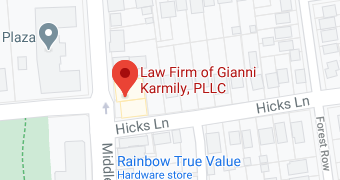
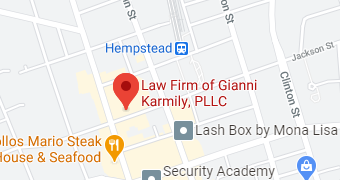
If you are convicted of homicide, you could spend the rest of your life behind bars. There is far too much at stake to take a chance on an inexperienced attorney. That’s why it’s in your best interest to seek legal representation from skilled homicide lawyer Gianni Karmily. The team at Law Firm of Gianni Karmily, PLLC understands that your future is on the line. Let us work tirelessly to reach the best possible outcome in your case. To schedule a confidential case evaluation with the Law Firm of Gianni Karmily, PLLC, call our Great Neck office at (516) 630-3405 or our Hempstead office at (516) 614-4228.