

Complicity Lawyer Aggressively Defending Your Rights in Nassau County
Many crimes are committed by more than one person. By law, if a group of people are involved in the commission of a crime, each member of the group can be held criminally liable for the acts of other members. This is called accessorial liability, and it can lead to serious penalties.
If you are accused of being an accessory to a crime, it’s in your best interest to contact skilled complicity attorney Gianni Karmily as soon as possible.
What is Complicity?
In New York, the law states you have criminal liability for the conduct of another if you are complicit in the commission of a crime. You can be held criminally liable for the conduct of another individual if you request, ask, solicit, demand, or intentionally help that person commit a criminal offense.
There are many ways for you to be found criminally liable for the conduct of another person. Examples of complicity may include:
- Financing the commission of a crime
- Providing supplies or information to assist with the commission of a crime
- Helping the perpetrator hide or destroy the evidence of the crime
These are some of the many ways that your involvement in criminal activity could lead to criminal liability.
What is Aiding and Abetting in New York?
Aiding and abetting, also known as accomplice liability or acting in concert, occurs when a person intentionally helps, encourages, or assists another person in committing a crime. Under New York Penal Law, someone can be held criminally responsible if they solicit, request, command, or intentionally aid another person in carrying out a criminal offense, even if they did not personally commit the act.
Can you be Charged With Aiding and Abetting Even if you Were Not Present at the Crime?
Yes. A person can still face charges for aiding and abetting a crime even if they were not physically present when the offense occurred. Criminal liability may apply if the person helped plan the crime, provided resources, gave instructions, or otherwise assisted in carrying out the offense. Prosecutors only need to show that the individual intentionally helped facilitate the crime.
What Must Be Proven In A Complicity Case?
The state must prove several key points in order to prove complicity. To hold someone criminally liable, the state must show:
- Someone committed a crime.
- The defendant requested, asked, solicited, demanded, or intentionally assisted that person to engage in criminal conduct.
- The defendant did so while in the state of mind required to commit the criminal offense.
This means you cannot be held criminally liable for the conduct of others simply for being at the scene of the crime as it was committed. This is true even if you knew that the crime was taking place. Your presence and knowledge of the crime does not make you criminally liable for the actions of the person who committed the crime.
What Are the Penalties For Complicity in Nassau County?
The penalties that you will face for being complicit will vary depending on the type of crime you were involved in committing. If you are proven to be criminally liable for the conduct of another, you are just as guilty as the person who actually committed the crime. This means you will face the same charges and penalties as the person who committed the crime.
For example, if you hire a hitman to kill someone, you could be held criminally liable for the hitman’s conduct. This is because you solicited the hitman’s help in committing the crime. As a result, both you and the hitman can face murder charges, even though you were not the one who actually committed murder. In the eyes of the law, you will be treated the same as the person who actually committed the crime.
What Must Prosecutors Prove for Aiding and Abetting Charges in New York?
To obtain a conviction for aiding and abetting in New York, prosecutors generally must prove:
- Another person committed the underlying crime
- The defendant intentionally helped, encouraged, or assisted in committing the offense
- The defendant shared the required criminal intent for the crime
Simply being present at the scene or knowing about the crime is usually not enough unless the person actively participated or encouraged the criminal conduct.
What Defenses are Available for Aiding and Abetting Charges in New York?
Common defenses to aiding and abetting or accomplice liability charges may include:
- Lack of intent to help commit the crime
- No active participation or assistance
- Mistaken identity or false accusations
- Insufficient evidence linking the defendant to the crime
- Renunciation (voluntary and complete withdrawal from the crime before it occurs, along with a substantial effort to prevent it)
How do I Find an Aiding and Abetting Lawyer Near Me?
To find an aiding and abetting lawyer near you, search for a criminal defense attorney experienced in accomplice liability and complex criminal cases in your area. Review law firm experience, attorney credentials, and client reviews, confirm the lawyer defends cases involving complicity, accessorial liability, or acting in concert, and schedule a case evaluation to discuss the facts of your case and possible defense strategies.
How Can An Attorney Help You Avoid Criminal Liability?
There are two main defense strategies that may be used to help you avoid criminal liability, including:
- State of mind: The law states you must be in the state of mind required for the crime in order to be criminally liable. For example, to commit first-degree murder, you must have the intent to kill the victim. If you were involved in the commission of this crime, but did not have the intent to kill someone, you cannot be held criminally liable.
- Accomplice actions: Attorney Gianni Karmily can also argue that your actions do not constitute accessorial liability. If you were simply watching the crime take place, for example, this does not make you criminally liable.
Don’t make the mistake of thinking you will get off easy simply because you were an accessory rather than the perpetrator of the crime. In New York, both the accessory and perpetrator will face the same penalties, which is why you will need to seek legal representation from criminal defense attorney Gianni Karmily.
How Much Do Nassau County Complicity Crimes Defense Attorneys Cost?
One of the first questions that may cross your mind is, “How much will a Complicity Crimes defense lawyer cost?” The answer to this question can vary depending on a number of factors, including the complexity of the case, the severity of the criminal charges, and the attorney’s experience in criminal law.
More complex cases involving serious crimes will require more of your attorney’s time, which means these cases will typically cost more than less serious offenses.
Complicity Crime defense attorneys usually charge flat fees for their legal services. Most attorneys charge a flat fee to handle pre-litigation matters and another flat fee if the case goes to hearings or trial.
Nassau County, Long Island, NY, is not the place to “Price Shop” for a Complicity Crimes defense attorney. If you do that, you risk making a life-altering mistake that will haunt you forever. If a law firm charges less, always ask yourself the reason why they are a “Budget” law firm.
3 Reasons You Should Hire The Law Firm of Gianni Karmily, PLLC As Your Complicity Crimes Defense Attorney
1) Lifelong Criminal Defense Attorney
Unlike most criminal defense attorneys, Gianni Karmily has been on the defense side his entire life from even before becoming a lawyer. While in law school, he was an intern for the public defender’s office at the Legal Aid and Defender Association in Detroit, Michigan. After moving back to Nassau County, Long Island, New York, he has been looking forward every day to being the voice of individuals facing criminal charges, including those accused of complicity crimes.
There is a natural advantage to an attorney you hire who has not been on the prosecution side because they have a totally different mindset not susceptible to institutional bias, which makes you subconsciously conditioned to think in a certain way and accept certain things that could put your client in peril.
A lifelong criminal defense lawyer naturally possesses aggressive skepticism, which is an intense, active approach to questioning and challenging information, authority, and the system. That’s the reason they are best suited to effectively do their job, which is to be the voice of that person and aggressively push back to make sure the system doesn’t roll over them.
2) Direct Access
Gianni Karmily is the principal attorney of the Law Firm of Gianni Karmily, PLLC. It is very important for our clients to be reassured that their complicity crime case doesn’t get shuffled around from one lawyer to another lawyer and from one paralegal to another paralegal. That is the reason they deal directly with Gianni for every aspect of representation, including court dates, case updates, and questions about their complicity crime charges. At the same time, Gianni regularly works with other experienced criminal defense attorneys and experts from different backgrounds to make sure he achieves the best result possible for all his clients.
3) Limit Number of Cases
The Law Firm of Gianni Karmily, PLLC is very thorough and doesn’t cut any corners when representing individuals accused of complicity crimes. That’s the reason the law firm limits the number of cases it takes each month in order for each case to receive the individualized attention it deserves and for Gianni to dedicate the adequate time required for a sound defense. Your case could affect your freedom, your career, and your future. Make sure you have an attorney with the experience and time to protect all three.
Why Nassau County Complicity Crimes Defense Clients Choose Gianni Karmily
- Dedicated criminal defense practice
- 2019–2024 Super Lawyers Rising Star in Criminal Law for New York Metro
- Member – (NYSACDL) New York State Association of Criminal Defense Lawyers
- Member – (CCBANC) Criminal Courts Bar Association of Nassau County
- 5.0-star client rating with 500+ Google reviews
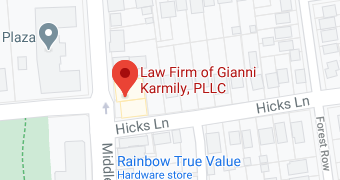
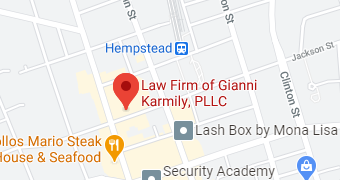
- Two Nassau County offices: Great Neck & Hempstead
- Available 24/7 for people arrested or accused with a criminal offense
Schedule A Case Evaluation With Our Experienced Nassau County Complicity Attorney Today
Have you been charged with criminal liability for conduct of another? If you were complicit in the commission of a crime, you need to seek legal representation from complicity defense attorney Gianni Karmily right away. You may not have been the one to commit the crime, but you can still face serious consequences for your involvement. Let Gianni work tirelessly to help you protect your freedom. To schedule a confidential case evaluation with the Law Firm of Gianni Karmily, PLLC, call our Great Neck office at (516) 630-3405 or our Hempstead office at (516) 614-4228.