

Long Island Lawyer Working Tirelessly to Help Clients Avoid Traffic Ticket Penalties in Nassau County
Most drivers will receive at least one traffic ticket at some point in their lives. If it happens to you, it’s important to know what you should do after being issued a ticket. You may think that paying the fine is the best way to handle your traffic ticket, but that’s not the case. If you are issued a traffic ticket, discuss your legal options with criminal defense attorney Gianni Karmily as soon as possible.
What Are the Most Common Types of Traffic Tickets?
Traffic tickets are issued to drivers on Long Island for a number of reasons. Some of the most common reasons why traffic tickets are issued include:
- Speeding
- Using an electronic device such as a cell phone while operating a motor vehicle
- Running a red light
- Running or rolling through a stop sign
- Reckless driving (which is a misdemeanor offense)
- Failing to yield to pedestrians
- Illegal lane changes
- Failure to signal when turning or changing lanes
- Driving unlawfully on the shoulder of the road
- Driving past a school bus while passengers are getting on or off
Most traffic tickets are issued during traffic stops conducted by law enforcement officers. However, there are also cameras in New York that can detect certain violations even when police officers are not around. If a camera detects a violation, it will capture an image of your license plate and you will receive a traffic ticket in the mail.
What Are the Penalties For Traffic Tickets In Nassau County, Long Island?
The penalties for a traffic ticket can vary depending on the nature of the traffic violation and your prior driving record. But in general, the penalties of getting a traffic ticket may include fines and points on your driver’s license. These may not seem significant, but accumulating points on your driver’s license can lead to increased insurance rates or the suspension or revocation of your driving privileges.
How Does the Driver Point System Work?
The Department of Motor Vehicles (DMV) will add points to your driving record if you are convicted of a traffic infraction. The points are not added immediately after the ticket is issued. Instead, the points are added when you are convicted of the violation.
The number of points that are added to your driving record will vary depending on the offense. The points assigned for common traffic infractions are:
- Speeding
- 1-10 mph over: 3
- 11-20 mph over: 4
- 21-30 mph over: 6
- 31-40 mph over: 8
- Over 40: 11
- Reckless driving: 5
- Tailgating: 4
- Improper cell phone use: 5
- Illegal lane change: 3
- Failing to stop for an unloading or loading school bus: 8
- Failing to stop at a red light or stop sign: 3
Points are not assigned for every violation. For example, points are not added for pedestrian, bicycle, or parking infractions.
There are penalties for accumulating too many points on your record. If you accumulate 6 or more points on your record within an 18-month period, you will be required to pay a Driver Responsibility Assessment fine. If you accumulate 11 or more points on your record within an 24-month period, your license will be suspended. It is illegal to operate a motor vehicle with a suspended license, so this suspension could have a huge impact on your daily life.
Should You Pay Traffic Ticket Fines?
Many people believe the only way to handle a traffic ticket is to pay the fine. But paying the fine is the same as admitting that you are guilty of committing the traffic infraction. By admitting guilt, you are agreeing to accept the penalties of a traffic ticket, including points on your driver’s license, which could lead to higher insurance rates and the loss of driving privileges.
Don’t pay a traffic ticket fine without speaking to an attorney first. Attorney Gianni Karmily may be able to fight your traffic ticket so you can avoid the consequences of a traffic infraction. Let him review your case to determine if it is possible to beat your ticket or at least reduce it and protect your driving record.
What Happens if I Ignore a Traffic Ticket in New York?
If you ignore a traffic ticket or fail to respond by the deadline, the court may enter a default judgment against you. This can result in additional fines, license suspension, and extra reinstatement fees. In many cases, failing to answer a ticket also means you lose the opportunity to challenge the violation in court.
How Many Points can a Traffic Ticket Add to my New York License?
Traffic violations in New York may add points to your driver’s license depending on the offense. Common examples include:
- Speeding 1–10 mph over the limit – 3 points
- Speeding 11–20 mph over the limit – 4 points
- Speeding 21–30 mph over the limit – 6 points
- Reckless driving – 5 points
- Improper cell phone use while driving – 5 points
Accumulating 11 or more points within a 24-month period can lead to a driver’s license suspension.
How Long do Traffic Ticket Points Stay on Your License in New York?
In New York, traffic infraction points typically remain active for 24 months from the date of the offense for purposes of calculating license penalties. However, the conviction may remain on your driving record longer, and insurance companies may use the violation when adjusting insurance premiums.
Is it Worth Fighting a Traffic Ticket in New York?
In most situations, it can be beneficial to fight a traffic ticket instead of immediately pleading guilty. Pleading guilty is generally treated as admitting guilt, which means the conviction can result in license points, fines, higher insurance premiums, and possible driver responsibility fees. Contesting the ticket may allow for dismissal, reduction to a lower infraction, or a penalty with fewer or no points, depending on the circumstances.
Do I Have to go to Court for a Traffic Ticket in New York?
In many cases, a court appearance is required if you plead not guilty to a traffic ticket. However, depending on the court and the type of violation, a traffic ticket attorney may be able to appear on your behalf, meaning you may not always have to personally attend every court date. The exact procedure depends on the court handling the ticket and the nature of the charge.
How do I Find a Traffic Ticket Lawyer Near Me?
To find a traffic ticket lawyer near you, search for a criminal defense or traffic violation attorney who regularly handles speeding tickets, moving violations, and cases involving points on your license in your area. Review law firm experience, attorney qualifications, and client feedback, confirm the attorney regularly appears in local traffic courts, and schedule a case evaluation.
How Much Do Nassau County Traffic Tickets Defense Attorneys Cost?
One of the first questions that may cross your mind is, “How much will a Traffic Tickets defense lawyer cost?” The answer to this question can vary depending on a number of factors, including the complexity of the case, the severity of the criminal charges, and the attorney’s experience in criminal law.
More complex cases involving serious crimes will require more of your attorney’s time, which means these cases will typically cost more than less serious offenses.
Traffic Ticket defense attorneys usually charge flat fees for their legal services. Most attorneys charge a flat fee to handle pre-litigation matters and another flat fee if the case goes to hearings or trial.
Nassau County, Long Island, NY, is not the place to “Price Shop” for a Traffic Tickets defense attorney. If you do that, you risk making a life-altering mistake that will haunt you forever. If a law firm charges less, always ask yourself the reason why they are a “Budget” law firm.
3 Reasons You Should Hire The Law Firm of Gianni Karmily, PLLC As Your Traffic Tickets Defense Attorney
1) Lifelong Criminal Defense Attorney
Unlike most criminal defense attorneys, Gianni Karmily has been on the defense side his entire life from even before becoming a lawyer. While in law school, he was an intern for the public defender’s office at the Legal Aid and Defender Association in Detroit, Michigan. After moving back to Nassau County, Long Island, New York, he has been looking forward every day to being the voice of individuals facing traffic violations and tickets.
There is a natural advantage to an attorney you hire who has not been on the prosecution side because they have a totally different mindset not susceptible to institutional bias, which makes you subconsciously conditioned to think in a certain way and accept certain things that could put your client in peril.
A lifelong criminal defense lawyer naturally possesses aggressive skepticism, which is an intense, active approach to questioning and challenging information, authority, and the system. That’s the reason they are best suited to effectively do their job, which is to be the voice of that person and aggressively push back to make sure the system doesn’t roll over them.
2) Direct Access
Gianni Karmily is the principal attorney of the Law Firm of Gianni Karmily, PLLC. It is very important for our clients to be reassured that their traffic ticket case doesn’t get shuffled around from one lawyer to another lawyer and from one paralegal to another paralegal. That is the reason they deal directly with Gianni for every aspect of representation, including court dates, case updates, and questions about their traffic ticket charges. At the same time, Gianni regularly works with other experienced criminal defense attorneys and experts from different backgrounds to make sure he achieves the best result possible for all his clients.
3) Limit Number of Cases
The Law Firm of Gianni Karmily, PLLC is very thorough and doesn’t cut any corners when representing individuals facing traffic tickets and violations. That’s the reason the law firm limits the number of cases it takes each month in order for each case to receive the individualized attention it deserves and for Gianni to dedicate the adequate time required for a sound defense. Your case could affect your freedom, your career, and your future. Make sure you have an attorney with the experience and time to protect all three.
Set Up A Case Evaluation With Our Experienced Traffic Ticket Attorney In Nassau County, Long Island
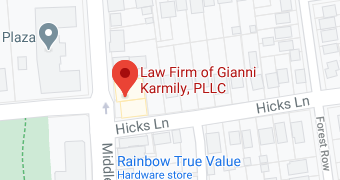
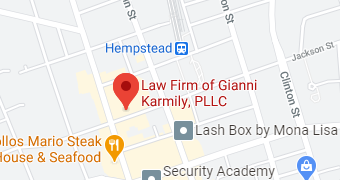
Have you been issued a traffic ticket on Long Island? If so, seek legal representation from skilled traffic ticket lawyer Gianni Karmily right away. Don’t admit guilt by paying the fine associated with your ticket—fight back with the help of Gianni Karmily. To schedule a confidential case evaluation with the Law Firm of Gianni Karmily, PLLC, call our Great Neck office at (516) 630-3405 or our Hempstead office at (516) 614-4228.